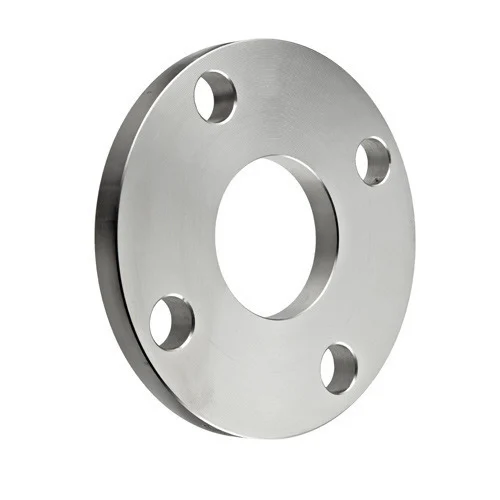
High-Performance Nickel-Based Alloy Flanges for the Most Demanding Corrosive Environments

MicroTech Stainless Steel Co. offers premium quality Hastealloy Flanges engineered for extreme corrosion resistance in the most aggressive chemical processing environments. Hastealloy alloys represent the pinnacle of nickel-based superalloys, providing exceptional resistance to both oxidizing and reducing acids, stress corrosion cracking, and localized attack in chloride-contaminated environments.
Our Hastealloy flanges are available in multiple grades including C-276, C-22, B-2, B-3, and X, each optimized for specific corrosive environments. These nickel-chromium-molybdenum-tungsten alloys maintain excellent mechanical properties at elevated temperatures while offering outstanding resistance to pitting, crevice corrosion, and stress corrosion cracking. The low carbon content in modern Hastealloy grades ensures excellent weldability and resistance to grain boundary precipitation.
Manufactured to international standards including ASME B16.5, B16.47, MSS SP-44, and ASTM B564, our Hastealloy flanges are available in all standard configurations and pressure classes. Each flange undergoes rigorous quality control testing including chemical analysis, mechanical testing, and non-destructive examination to ensure compliance with the most stringent industry specifications.
With superior performance in hydrochloric acid, sulfuric acid, phosphoric acid, acetic acid, and numerous other aggressive chemicals, Hastealloy flanges are the material of choice for critical applications in chemical processing, petrochemical, pharmaceutical, pollution control, and pulp and paper industries where material failure is not an option.
Exceptional resistance to both oxidizing and reducing acids including hydrochloric, sulfuric, phosphoric, and acetic acid. C-276 and C-22 grades offer broad-spectrum corrosion resistance across diverse chemical environments, making them ideal for multi-purpose chemical plants.
Outstanding resistance to chloride-induced stress corrosion cracking even in seawater and chloride-contaminated environments. The high nickel content provides immunity to chloride SCC that commonly affects stainless steels and other alloys.
Maintains excellent mechanical properties and corrosion resistance at elevated temperatures up to 1900°F (1040°C). Hastealloy X offers superior oxidation resistance and creep strength for high-temperature applications in gas turbines and industrial furnaces.
High molybdenum and tungsten content provides exceptional resistance to pitting and crevice corrosion in halide-containing environments. C-22 grade offers the highest PREN (Pitting Resistance Equivalent Number) for maximum localized corrosion resistance.
Low carbon content (≤0.01%) ensures excellent weldability without the need for post-weld heat treatment. Can be welded using standard techniques including GTAW, GMAW, and SMAW processes without grain boundary precipitation concerns.
B-2 and B-3 grades specifically engineered for exceptional resistance to reducing acids including hydrochloric acid and sulfuric acid at all concentrations and temperatures. Superior performance in non-oxidizing acid environments where other alloys fail.
Excellent resistance to mixed acid environments containing oxidizing and reducing species. C-276 and C-22 provide reliable performance in complex chemical mixtures encountered in chemical processing, pharmaceutical synthesis, and waste treatment applications.
Manufactured from certified mill test certificate material with full traceability. Each flange undergoes comprehensive testing including PMI verification, dimensional inspection, and corrosion testing to ensure compliance with international standards and customer specifications.
Maintains metallurgical stability over a wide temperature range without formation of detrimental intermetallic phases. Excellent thermal fatigue resistance for applications involving temperature cycling and thermal shock conditions.
Extended service life in aggressive environments reduces maintenance costs and downtime. Superior resistance to general corrosion, localized attack, and environmental cracking provides decades of reliable service in critical applications where premature failure is unacceptable.
Reactors, heat exchangers, piping systems, and equipment handling hydrochloric acid, sulfuric acid, phosphoric acid, acetic acid, and complex chemical mixtures. C-276 and C-22 are preferred materials for multi-purpose chemical plants requiring broad corrosion resistance.
Process equipment for pharmaceutical synthesis including reactors, distillation columns, crystallizers, and transfer systems. Hastealloy's corrosion resistance and cleanability make it ideal for high-purity pharmaceutical applications requiring stringent contamination control.
Hydrocracking units, catalytic reforming, alkylation processes, sour water systems, and FCC unit applications. Excellent performance in hydrogen sulfide environments, spent acid recovery units, and crude oil processing at elevated temperatures.
Flue gas desulfurization (FGD) systems, scrubbers, waste gas treatment equipment, and environmental control systems. Superior resistance to acidic condensates, chlorides, and oxidizing conditions encountered in emission control applications.
Bleaching equipment, digesters, chlorine dioxide generators, and chemical recovery systems. Resistance to chlorine, chlorine dioxide, hypochlorite solutions, and acidic bleaching environments makes Hastealloy ideal for modern pulp bleaching operations.
Spent fuel reprocessing equipment, dissolution systems, and radioactive waste handling. Hastealloy's radiation resistance and corrosion performance in nitric acid environments make it essential for nuclear fuel cycle applications.
Manufacturing equipment for agricultural chemicals including chlorinated organics, phosphorus-based compounds, and complex organic synthesis. Resistance to aggressive chlorinated solvents and mixed acid catalysts used in agrochemical production.
Hazardous waste incineration, acid recovery systems, chemical waste neutralization, and metal recovery processes. Hastealloy's durability in mixed waste streams containing multiple aggressive species ensures reliable long-term operation in waste management facilities.
Best for: Broad-spectrum chemical resistance, mixed acid environments, chloride-contaminated solutions, oxidizing and reducing conditions.
Key Properties: Excellent resistance to pitting and stress corrosion cracking in chloride environments. Superior performance in both oxidizing (ferric chloride, cupric chloride, wet chlorine) and reducing (hydrochloric acid, sulfuric acid) conditions. The most versatile Hastealloy grade for general chemical processing.
Typical Applications: Multi-purpose chemical plants, flue gas desulfurization, pharmaceutical reactors, nuclear fuel reprocessing, pollution control equipment.
Best for: Maximum resistance to localized corrosion, high-chloride environments, oxidizing acid solutions, seawater applications.
Key Properties: Higher chromium content (22%) provides enhanced oxidation resistance and pitting resistance compared to C-276. Highest PREN value among Hastealloy C-family alloys. Exceptional resistance to crevice corrosion in seawater and chloride solutions.
Typical Applications: Seawater-cooled heat exchangers, chlorination systems, oxidizing chemical processes, offshore oil and gas production, spent acid recovery.
Best for: Hydrochloric acid (all concentrations), sulfuric acid (reducing conditions), acetic acid, phosphoric acid.
Key Properties: Very high molybdenum content (28%) provides outstanding resistance to reducing acids. Low chromium content optimizes performance in non-oxidizing environments. Excellent resistance to hydrochloric acid up to boiling temperatures.
Typical Applications: Hydrochloric acid pickling, sulfuric acid production and processing, acetic acid synthesis, phosphoric acid evaporators and concentrators.
Best for: High-temperature reducing acid service, improved weldability compared to B-2, processes involving temperature cycling.
Key Properties: Modified composition provides better thermal stability and resistance to grain boundary precipitation compared to B-2. Improved fabricability and reduced stress corrosion cracking susceptibility. Maintains B-2's excellent reducing acid resistance.
Typical Applications: High-temperature hydrochloric acid reactors, sulfuric acid alkylation units, acetic acid distillation, chemical synthesis involving thermal cycling.
Best for: High-temperature oxidizing environments, gas turbine components, industrial furnaces, heat treating equipment.
Key Properties: Outstanding oxidation resistance up to 2200°F (1200°C). Excellent high-temperature strength and creep resistance. Superior thermal stability for prolonged exposure at elevated temperatures. Good carburization resistance.
Typical Applications: Gas turbine combustors, industrial furnace components, petrochemical furnace applications, heat treating fixtures, high-temperature chemical reactors.