High-PREN Super Austenitic Stainless Steel Fittings for Seawater and Chloride Service

MicroTech Stainless Steel Co. supplies premium SMO 254 (UNS S31254) Pipe Fittings, a high-performance super austenitic stainless steel with 6% molybdenum content designed for superior resistance to pitting, crevice corrosion, and stress corrosion cracking in chloride environments. With a Pitting Resistance Equivalent Number (PREN) exceeding 42, SMO 254 outperforms standard austenitic grades like 316L in seawater, chloride-contaminated processes, and aggressive chemical environments.
The composition featuring 20% chromium, 18% nickel, and 6.1% molybdenum combined with nitrogen strengthening delivers outstanding corrosion resistance equivalent to or exceeding many nickel alloys at significantly lower cost. SMO 254 maintains structural integrity in seawater, brackish water, chloride-contaminated cooling systems, and chemical processing streams containing chlorides up to 10% concentration.
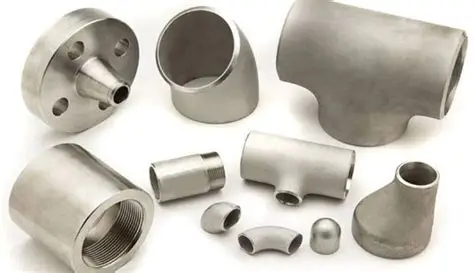
Our SMO 254 fittings are manufactured to ASME B16.9 and ASTM A403 standards in butt weld configuration including elbows, tees, reducers, caps, and stub ends. Available in sizes from 1/2" to 12", each fitting undergoes comprehensive testing including PMI verification, corrosion testing per ASTM G48 (ferric chloride pitting test), and dimensional inspection to ensure reliable performance in offshore platforms, desalination plants, chemical processing, and marine applications.
PREN >42 provides exceptional resistance to seawater pitting and crevice corrosion. Outperforms 316L, Duplex 2205, and approaches Super Duplex performance at lower cost.
High nickel (18%) and molybdenum (6%) content with nitrogen strengthening provides outstanding resistance to chloride-induced stress corrosion cracking.
6.1% molybdenum combined with chromium and nitrogen delivers superior localized corrosion resistance. Critical Pitting Temperature (CPT) exceeds 50°C per ASTM G48.
Maintains corrosion resistance from cryogenic temperatures to 400°C (750°F). Suitable for both cold seawater and elevated temperature chemical processing applications.
Austenitic structure provides good weldability and formability compared to duplex alternatives. Standard austenitic welding procedures applicable with proper filler metals.
Lower cost than nickel alloys (Inconel, Hastealloy) while providing comparable chloride corrosion resistance. Bridges gap between standard SS and exotic alloys.
Seawater cooling systems, offshore platforms, subsea pipelines, ballast systems, marine heat exchangers, shipbuilding, and naval applications requiring seawater resistance.
Reverse osmosis systems, multi-stage flash distillation, seawater intake, brine handling, high-salinity process streams, and water treatment facilities.
Chloride-contaminated processes, bleaching operations, chlorine production, hypochlorite handling, and chemical plants with high-chloride environments.
FGD systems, seawater-cooled condensers, geothermal power plants, coastal power stations, and cooling water systems in high-chloride environments.
Offshore production platforms, subsea equipment, sour gas service with chlorides, seawater injection systems, and topside processing in marine environments.
Bleach plants, chlorine dioxide systems, modern ECF (Elemental Chlorine Free) bleaching operations, and equipment handling high-chloride pulping chemicals.